
Written By: Gary Hite, Research Content Writer
Reviewed By: Natalie Kunsman, M.D., Board-Certified Physician
Last Reviewed: September 6, 2026
Researchers working with growth factor signaling models face a practical choice early in study design: native IGF-1 or the modified analog IGF-1 LR3. The two molecules share a common signaling target, yet they behave differently in binding assays, in serum-containing media, and across storage conditions. Knowing where those differences sit helps a research team select the right reagent, design cleaner experiments, and interpret results with fewer confounding variables. Sourcing both forms from a single research peptide supplier also keeps documentation consistent, which matters when results need to be reproduced. This article breaks down the comparative binding and stability characteristics reported in preclinical and in-vitro literature, framed strictly for laboratory research and educational use.
A note up front: IGF-1 LR3 is supplied for research purposes only. It is for laboratory research and educational use, handled exclusively by qualified researchers and academic professionals. It is not for human or veterinary use, and not for clinical, diagnostic, or therapeutic application. Every observation below describes molecular and cell-based research, nothing more.

Two Molecules, One Signaling Target
Native IGF-1 is a single-chain polypeptide of 70 amino acids stabilized by three intramolecular disulfide bonds, structurally related to proinsulin. Its reference sequence data is well documented in public protein databases, which gives research teams a fixed point for verifying identity and purity. In biological systems it does not circulate alone. A large share associates with a family of IGF binding proteins, and those partners regulate where and when the molecule can interact with its target receptor system.
IGF-1 LR3 is an engineered analog built on the same core sequence with two deliberate modifications. First, the glutamic acid residue at position 3 is replaced with arginine, the change that gives the molecule its “R3” designation. Second, a 13-residue extension is added to the N-terminus, the source of the “Long” label. Together these changes produce an 83-amino-acid peptide with a higher molecular weight than the native form and, more importantly, a distinct binding profile that shapes how it performs in the lab.

Comparative Binding Behavior
The most consequential difference between the two molecules lies in how each one interacts with IGF binding proteins.
Affinity for IGF binding proteins
Native IGF-1 binds IGF binding proteins with high affinity. Published binding protein research describes how these partners can impede access of the growth factor to its receptor, and in serum or serum-containing culture media a substantial fraction of native IGF-1 is therefore sequestered. That sequestration limits the amount available to interact with the receptor at any given moment. The single substitution at position 3 in IGF-1 LR3 markedly lowers this binding-protein affinity. As a result, far more of the analog stays unbound in the same system.
Affinity for the receptor
Both molecules retain the ability to engage the type 1 IGF receptor. The three-helix fold that presents this binding surface has been resolved in structural studies, which help explain why both forms still dock at the receptor. Reported data place IGF-1 LR3 receptor affinity in the same general range as the native form, with some studies noting modestly lower intrinsic receptor affinity for the analog. In binding-protein-rich systems, though, the reduced sequestration of IGF-1 LR3 tends to dominate the overall picture, leaving more free molecules available within the experimental environment. This is why many in-vitro studies report greater measured response within the experimental system for the analog at equivalent concentrations, even when intrinsic receptor affinity is similar or slightly lower.

Stability Across Research Conditions
Binding and stability are linked, because the same binding-protein interaction that limits native IGF-1 availability also influences how long the molecule persists in a given environment.
Stabilization through binding partners
In systems that contain IGF binding proteins, native IGF-1 associates with these partners to form larger complexes. That association extends the functional persistence of the native molecule in those systems, but it also ties availability to the concentration and behavior of the binding partners, which can shift between serum lots and media formulations. Building a routine for evaluating stability and sterility across lots removes one more source of variability before it reaches your data.
Predictability of the analog
Because IGF-1 LR3 interacts only weakly with binding proteins, its behavior in culture depends far less on serum composition. For research teams, that often translates into more consistent results across experiments and a smaller source of lot-to-lot variability. The trade-off is that the analog does not gain the same binding-protein buffering, so attention to working concentration and exposure time stays important during study design.
Handling and reconstitution
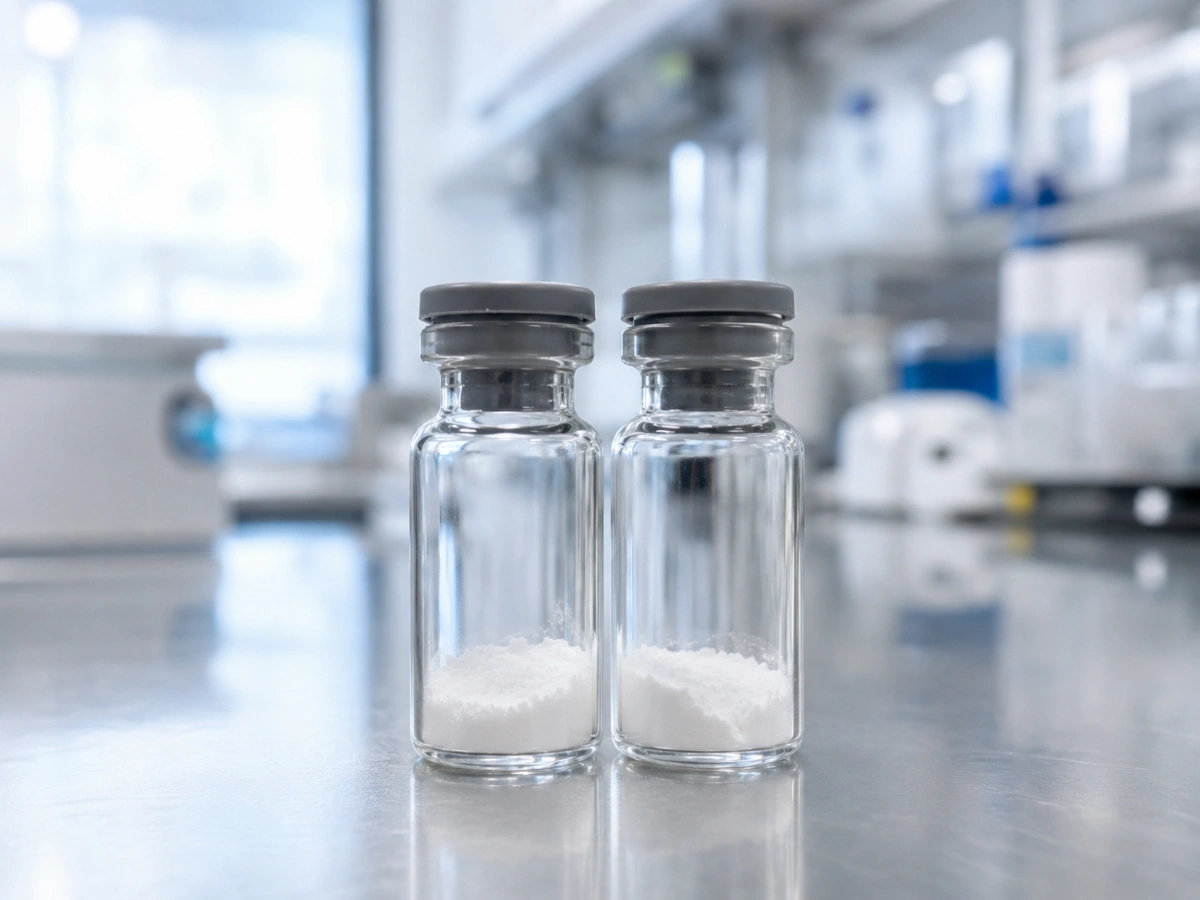
Both molecules are peptides, and both are sensitive to repeated freeze-thaw cycles, elevated temperature, and inappropriate buffer conditions. Consult a reconstitution solvent guide before opening a vial, since the choice of solvent influences both solubility and the integrity of the peptide in solution. Lyophilized material is typically stored frozen and protected from moisture, and following established lyophilized storage protocols protects activity from the moment a shipment arrives. After reconstitution in a suitable sterile buffer, dividing the solution into single-use aliquots helps preserve activity and supports reproducible working concentrations across an experimental series. Confirm reconstitution and storage parameters against the certificate of analysis and the documentation supplied with each lot before beginning work.
Side-by-Side Summary
| Property | Native IGF-1 | IGF-1 LR3 |
| Chain length | 70 amino acids | 83 amino acids |
| Key modifications | None (wild-type sequence) | Arginine substitution at position 3 plus N-terminal extension |
| Binding-protein affinity | High | Markedly reduced |
| Receptor engagement | Yes | Yes, retained |
| Availability in serum-containing media | Lower, largely sequestered | Higher, mostly free |
| Apparent potency in culture | Baseline | Often greater at equal concentration |
| Sensitivity to serum lot variation | Higher | Lower |
The values above describe molecular and cell-based research properties only.

Choosing Between the Two for a Study
Selecting a reagent comes down to the question the research is built to answer. Studies that aim to model native binding-protein interaction patterns, including the regulatory role of binding proteins, may call for native IGF-1 precisely because it participates in those interactions. Studies that prioritize consistent experimental exposure conditions, reduced interference from serum components, or reproducible working concentrations across long experimental runs often favor IGF-1 LR3 for its predictable, largely binding-protein-independent behavior. Whichever form a protocol calls for, applying consistent practices for handling peptide solutions keeps the comparison fair across experimental arms.
Record the chosen reagent, its source, lot number, and reconstitution protocol in the methods log. That documentation supports reproducibility and makes it far easier to compare outcomes across experiments or between laboratories.
Intended Use and Compliance
IGF-1 LR3 is offered strictly as a research material. It is intended for laboratory research and educational purposes only and is handled exclusively by qualified researchers and academic professionals. It is not for human or veterinary use, not for clinical, diagnostic, or therapeutic application, and not for consumption in any form. Nothing in this article should be read as guidance for use outside a controlled research setting, and no statement here describes any effect in humans. Researchers carry full responsibility for following all applicable institutional, local, and national regulations governing the procurement, storage, handling, and disposal of research compounds.
Conclusion
The decision between native IGF-1 and its modified analog is a design choice, not a formality, and the binding and stability data make the distinction clear. Native IGF-1 engages binding proteins with high affinity, which shapes both its availability and its persistence in serum-containing systems. The analog sidesteps much of that interaction, delivering more free molecules and more predictable behavior across long experimental runs. Map those properties to the question your model is built to answer, then commit to the reagent that fits.
Standardize reconstitution, control storage conditions, and record lot details so every result stays reproducible and defensible. Confirm purity against the supplied documentation before each study, and document the rationale behind your selection in the methods log. Teams that treat reagent choice as a deliberate variable, rather than an afterthought, build cleaner datasets and draw conclusions that hold up to scrutiny. Choose with intent, and the data follows.
FAQs
What is the main difference between IGF-1 LR3 and native IGF-1?
The analog carries two structural changes: an arginine substitution at position 3 and a 13-residue N-terminal extension, giving it 83 amino acids against the native 70. Those edits sharply reduce its affinity for IGF binding proteins, so in serum-containing systems more of the molecule stays free and available to the receptor. Treat the two as distinct reagents with distinct binding profiles rather than interchangeable forms.
Why do researchers select IGF-1 LR3 for cell culture studies?
Binding proteins present in serum-containing media sequester much of any native IGF-1 added to a culture, which lowers and varies the effective concentration. The analog largely evades that sequestration, so it delivers more consistent experimental availability and reduces lot-to-lot noise across long runs. Choose it when a design prioritizes reproducible, predictable working concentrations over modeling native binding-protein dynamics.
How should IGF-1 LR3 be reconstituted and stored for research?
Store lyophilized material frozen and protected from moisture, then reconstitute in a suitable sterile solvent confirmed against the product documentation. Divide the working solution into single-use aliquots to avoid repeated freeze-thaw cycles, which degrade peptide integrity. Always verify storage and reconstitution parameters against the certificate of analysis supplied with each lot before starting an experiment.
Does IGF-1 LR3 engage the IGF-1 receptor differently than the native form?
Both forms bind the type 1 IGF receptor. Reported data place the analog intrinsic receptor affinity in the same general range as the native molecule, sometimes modestly lower. In binding-protein-rich systems, though, its reduced sequestration leaves more free molecules available, which is why studies often record greater measured response within the experimental system at equal concentrations.
Is IGF-1 LR3 approved for human use?
No. It is supplied strictly as a research material for laboratory and educational use, and it is not for human or veterinary use, clinical or diagnostic application, or consumption in any form. Researchers are responsible for handling, storing, and disposing of it in line with all applicable institutional, local, and national regulations.
Disclaimer: IGF-1 LR3 is sold and supplied strictly for laboratory research and educational purposes. It is intended exclusively for use by qualified researchers and trained laboratory professionals.
This product is not a drug, food, cosmetic, or dietary supplement. It is not for human or veterinary use and must not be administered to or consumed by humans or animals under any circumstances. It is not intended to diagnose, treat, cure, mitigate, or prevent any disease or health condition.
The information in this article has not been evaluated by the Food and Drug Administration or any comparable regulatory authority. No representation or warranty, express or implied, is made regarding the safety, efficacy, or fitness of this material for any purpose other than controlled scientific research. All content is provided for general informational and educational use only and does not constitute medical, legal, or professional advice.
By purchasing or handling this product, the buyer accepts full responsibility for using it safely, lawfully, and appropriately, including its proper storage, labeling, handling, and disposal in accordance with all applicable institutional, local, state, national, and international regulations. The buyer also confirms that they hold the training, facilities, and qualifications required to work with research compounds and that they are of legal age in their jurisdiction. The supplier accepts no liability for any misuse, mishandling, or unauthorized application of this product.